.png)
Best Lakes in Banff: Where to Go & Why Lake Louise Isn't the Only One

Updated: May 25
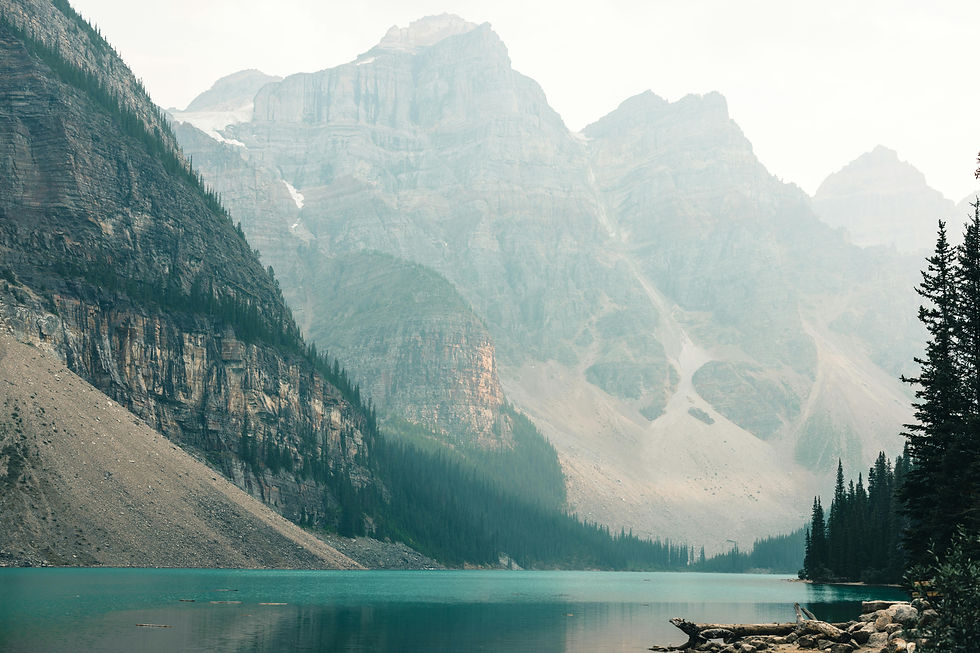
Everyone knows Lake Louise. You've seen the photo. The Fairmont hotel, the turquoise water, the peak rising behind it. It's on every postcard, every Instagram feed, every "visit Canada" listicle since photography was invented.
The problem: 4,000 people a day show up in summer to take the same photo you're taking.
Here's the thing: Banff has seventeen major lakes, most of them equally stunning and almost all of them quieter. A 20-minute drive gets you from the chaos to a place where you can actually hear yourself think. The trick isn't finding the best lake—it's finding the best lake at the right time.
This guide covers six lakes worth the drive: which ones earn the crowds, which ones don't, and when to visit so you're not standing shoulder-to-shoulder with 4,000 other people trying to get the perfect shot.
Lake Louise — The Jewel of the Rockies (and everyone knows it)

Lake Louise is worth the visit. Full stop. The water is genuinely that turquoise. The peak is that dramatic. The hotel is that elegant.
It's also slammed. The parking lot fills by 8am in summer. The shoreline is thick with people by 9. If you're going, go early. Like 6am early. Like "the Fairmont café isn't open yet" early.
Distance from Banff town: 56 kilometers, about 60 minutes.
Why it's worth it: The scale is different. This isn't a "pretty lake"—it's a lake surrounded by 3,464-meter peaks. The glacier at the head feeds the water. The colour isn't a filter; it's glacial silt in the water catching light.
Best time: Sunrise, before the buses arrive. June through September. October can work if you don't mind cold. November onwards and you're looking at ice.
The honest bit: If you've seen the photo, you know what to expect. The experience matches the image—which is rare, actually. Most iconic places disappoint in person. This one doesn't. But you'll share it with thousands of other people, so manage expectations on solitude.
Moraine Lake — The Most Photographed (and why that's weird)
Moraine Lake sits ten kilometers up a winding road from Lake Louise. The road is narrow. The parking lot is small. And somehow, it's less crowded than Lake Louise despite being equally spectacular.
The water is that same turquoise. The peaks are sharper—Moraine sits in a bowl, so the rock walls come up faster and steeper. The light hits different. Every guide worth their compass treats Moraine sunrise as the shot.
Distance from Banff town: 66 kilometers via Lake Louise.
Why it's worth it: The bowl effect. Lake Louise is pretty. Moraine is enclosed. You feel the scale differently. The water reflects the peaks differently. The light show in the first two hours after sunrise is genuinely unmatched.
Best time: June to late September. Moraine can stay accessible into October, but the light window gets tight and parking becomes a game.
The practical thing: The access road is one-way between 9am and 6pm in peak season. You either go early, or you go mid-afternoon when the morning crowds thin out. Both work. Neither time gives you the pier-to-yourself feeling, but you won't be standing elbow-to-elbow either.
Lake Minnewanka — The Largest (and the one everyone forgets)

Lake Minnewanka is 21 kilometers long. It's the biggest lake in Banff National Park. It has boat tours, a lakeside walk, views that span across the water for miles. And somehow, tourists skip it.
They skip it because it's not on the Instagram shortlist. It's not the "famous one." Which is, honestly, the best reason to go.
Distance from Banff town: 12 kilometers, about 15 minutes.
Why it's worth it: Size. Quiet. The walk along the shore is legitimately flat and easy—unlike most Banff hikes, which assume you're training for mountaineering. You can walk here with a coffee and not feel like you're grinding through fitness. The water is cold and deep and blue, not that glacier-silt turquoise. Different beauty.
Best time: June through October. The lake is accessible year-round, but summer weather is obviously better.
The opinion: If you've got four days in Banff and you spend three at Lake Louise and Moraine, you've made the right choice. If you've got seven days and you don't visit Minnewanka, you've made the wrong one. This is the lake that teaches you what Banff actually feels like—not what the postcard says it feels like.
Peyto Lake — That Impossible Blue

Peyto Lake sits on the Icefields Parkway, about halfway between Lake Louise and Jasper. The water is a blue that doesn't exist in nature. Or it does, technically, but your eyes refuse to believe it.
The blue comes from glacial silt—ultra-fine sediment suspended in the water. It's the same thing that makes Lake Louise turquoise. But Peyto's silt concentration is higher. The blue is wilder.
Distance from Banff town: 60 kilometers, about 75 minutes north on the Icefields Parkway.
Why it's worth it: The viewpoint is five minutes from the car. The lake itself is 80 meters below you. The perspective is vertiginous. The blue hits harder from above. On a clear day, you can see the glacier that feeds it. It's the sort of view where you stand silently for three minutes before anyone speaks.
Best time: July and August for the clearest skies. June and September still work. The water's blue year-round, but crowds and light both peak mid-summer.
The note: This is a drive-through stop, not a hike. You park, walk five minutes, take the photo, and leave. It's valuable precisely because it doesn't eat your day. Perfect if you're doing the Icefields loop in a single long push.
Bow Lake — The Underrated One
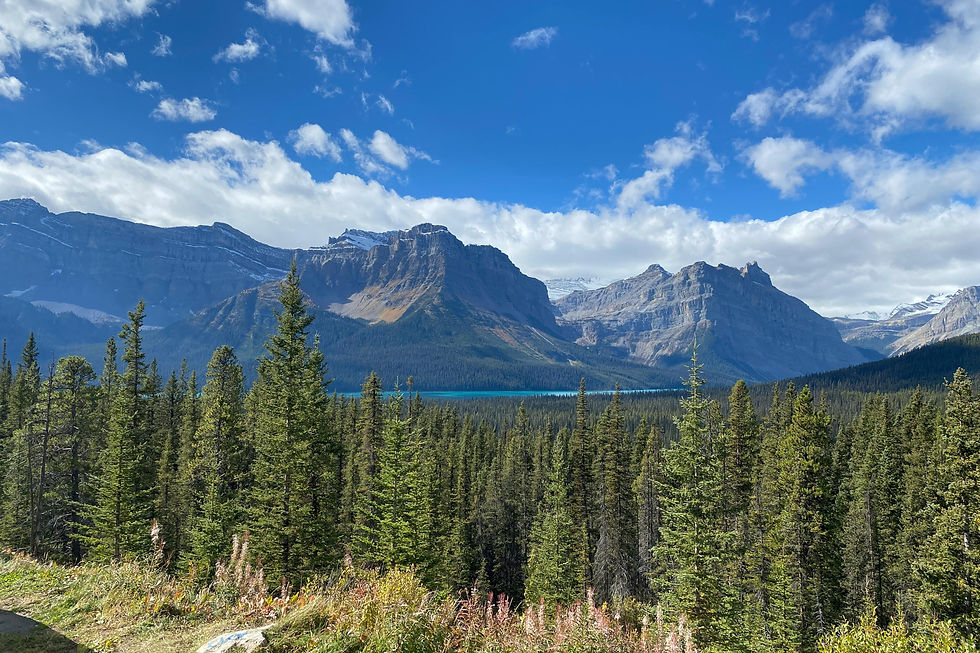
Bow Lake sits further up the Icefields Parkway, about 40 kilometers from Lake Louise. Most people blow past it on the way to somewhere else. That's a mistake.
The lake is fed by Bow Glacier. The shoreline is quiet. The peak opposite the glacier is dramatic without being crowded. This is the lake that feels like you've discovered something, even though you haven't—hundreds of people drive past it every day.
Distance from Banff town: 100 kilometers, about 90 minutes via the Icefields Parkway.
Why it's worth it: The Num-Ti-Jah Lodge sits on the shore. The hiking options range from 15-minute walks to serious backcountry routes. The light in late afternoon is golden. The place feels inhabited but not invaded. You get a sense of what mountain touring actually felt like before Instagram existed.
Best time: July and August. June and September are fine if the weather cooperates. The Icefields Parkway closes in winter, so October onwards is no-go.
The honest bit: Bow Lake requires a bit more drive time than Lake Louise or Moraine. But that drive time—that's the whole point. It keeps people out. You're trading convenience for quiet.
Best Time to Visit Banff Lakes (and when NOT to bother)

June: Water is highest. Weather is unpredictable. Crowds are building. Go early, go off-peak, or go to Minnewanka and skip Louise.
July and August: Peak season. Clear skies. Crowded. Lake Louise parking fills by 8am. Moraine by 9. This is "book your sunrise viewing before you leave home" season.
September: Sweet spot. Weather is still stable. The crowds thin out the second week. The light is gold instead of harsh noon light. Trees are starting to turn. If you're only going once, pick September.
October: The high lakes freeze. Minnewanka stays open. The light is spectacular. The crowds are gone. The warning: cold mornings, variable weather, some access roads close mid-month.
November through April: Most lakes are iced over or inaccessible. Minnewanka stays accessible. Winter requires different gear, different planning, different mindset. It's beautiful, but it's not a casual visit.
The skip: Don't visit the famous lakes in July if you want solitude. Don't visit Bow Lake in November. Don't visit Lake Louise if your idea of a good day is sitting quietly. That place is designed to be busy.
How to Get There & What to Bring

From Calgary: 90 minutes to Banff town. Lake Louise is another hour from there. Moraine Lake is 10 minutes past Louise.
Navigation: Google Maps works. The Icefields Parkway is signed. This isn't a backcountry bushwhack—these are well-trafficked routes.
What you actually need:
For shore walks (Lake Louise, Moraine, Minnewanka): Comfortable shoes, layers, water, sunscreen. You're not hiking; you're walking.
For the Icefields Parkway: Same, plus fill your tank in Lake Louise town. It's 230 kilometers to Jasper and the stops are sparse.
For serious hikes: Proper hiking boots, a map, water (1.5 liters per person), sun protection, bug spray, and an honest assessment of your fitness level. Check trail conditions and difficulty ratings before heading out.
The real thing nobody mentions: Banff lakes are cold. 4–8°C most of the year. If you slip, you're not getting a quick refreshing dip. You're getting hypothermia. Stay on the paths. Respect the water.
A Word on Crowds & Parking
Lake Louise parking has a reservation system in summer. Book ahead through Parks Canada or arrive before 7am. Moraine Lake has a small lot with a waitlist—go early or expect to turn around.
Minnewanka and Bow Lake don't have the same pressure. Peyto is a pullout, parking is abundant.
The solution to crowds isn't to fight them. It's to go at a different time. Sunrise parking lots aren't full. Sunset ones aren't either. The 5pm-to-7pm window after the tour buses leave is surprisingly quiet.
Or go to the lake that's not on the Instagram feed. Lake Minnewanka is 15 minutes from Banff and empty. Bow Lake is beautiful and requires just enough drive time to keep the casual visitor away.
Frequently Asked
Which lake is the most beautiful? Moraine Lake edges Lake Louise by a hair. The bowl effect and the light hit harder. Louise is more famous, Moraine is more dramatic. Both are genuinely worth the time.
Can I see all six lakes in one day? Yes, if you start before 7am and you're willing to skip lunch. More realistic: pick three. Lake Louise + Moraine (one location, 20-minute drive between them) + either Minnewanka or Peyto. That's a full day without feeling rushed.
What if I only have time for one lake? Lake Moraine over Lake Louise, but only if you can go at sunrise or late afternoon. If you're arriving at 11am and leaving at 4pm, Lake Louise has better infrastructure and you won't fight the crowds as hard. Minnewanka if you want to avoid people entirely.
Do I need hiking boots? For the shore walks, no. Comfortable shoes work. For the alpine trails (like the hikes around Consolation Lake or the routes above Moraine), yes, proper boots matter. The trails are rocky, steep, and exposed.
Is the water safe to drink? No. It's glacial silt and cold-water microbes. Carry your own. Giardia isn't romantic.
What should I pack for a lake visit? Layers. Banff weather changes in 30 minutes. You can be in a t-shirt at noon and needing a jacket by 2pm. Sunscreen (the UV is intense at altitude). Hat and sunglasses. Water. That's the minimum. Rain jacket if the forecast is iffy.
Can I go in the winter? Minnewanka, yes. The others, no—they're frozen or the roads are closed. Winter lake visits require winter gear, knowledge, and conditions. Not a casual outing.
How much time should I budget for each lake? Lake Louise and Moraine: 2–3 hours if you're walking the shore. 45 minutes if you're just grabbing the viewpoint photo. Minnewanka: 1.5 hours for the walk, 30 minutes for the viewpoint. Peyto and Bow: 20 minutes from car to viewpoint. Add drive time on top.
Looking for a Stress-Free Lake Tour?
If you're planning a day but don't want to navigate parking wars or wonder if you're missing something, we run guided lake tours through Banff and Lake Louise. Small groups, flexible timing, routes that skip the crowds. Sunrise to Moraine, breakfast in Lake Louise village, then wherever the day takes you.
Browse our Banff lake tours or call 226-201-3180.
And if you've got questions about the lakes, seasons, or what to bring—email stoneskyadventures@gmail.com. We'll help.


Comments