.png)
Drumheller: The Dinosaur Capital With Way More Than Dinosaurs

Drumheller bills itself as the "Dinosaur Capital of the World." Fair claim—the Royal Tyrrell Museum has one of the largest collections of complete dinosaur skeletons on the planet. But here's the thing: most people book a weekend expecting dinosaurs, and leave wondering why they didn't budget an extra day for the badlands. (Spoiler: the badlands are the real star. Dinosaurs are just the lure.)
The dinosaurs got you here. The landscape keeps you.
Drumheller is a small town (population ~8,000) in Alberta's Red Deer River valley, about 140 km northeast of Calgary. The town itself is a corridor of hotels and restaurants. Nothing fancy, nothing memorable. The real attraction sits in the surrounding badlands—a 100-square-kilometer landscape of hoodoos, canyons, and eroded formations that look like Mars if Mars had better light and fewer Elon Musk billboards. You're literally looking at 75-million-year-old rock layers just... sitting there. Not hidden behind trees. Not requiring a three-hour hike. Just sitting there, waiting for your camera to do its job.
The Royal Tyrrell Museum: Where It Starts (And You'll Spend Longer Than You Think)

Yes, go. The museum sits on the edge of the badlands and houses one of the world's largest collections of complete dinosaur skeletons. The main gallery is genuinely world-class. You'll spend 2–3 hours here easily. (Yes, even if you think dinosaurs are for kids—the geology and the sheer scale of the fossils changes minds. One T-Rex femur looks like a small car. Your brain recalibrates.)
Admission is $20 per adult. The audio guide is included—and unlike most museum audio guides (which are recorded by people who sound like they'd rather be anywhere else), this one is legitimately well-produced. The quality of the interpretation is good enough that you'll actually use the headphones instead of ditching them after three exhibits. (This one didn't phone it in.) Plan your visit at the Tyrrell Museum website.
Entry tip: arrive at 10 AM or after 3 PM. Midday is tour buses—fifty-person groups shuffling through like it's a cattle call. The museum is closed Mondays in shoulder season (May, September–October) and December–February. (Yes, Alberta winters close things. No, it's not negotiable.)
The World's Largest Dinosaur: The Photo Stop That Actually Works

An 86-foot-tall fiberglass T-Rex stands at the edge of town, visible from the highway, unmissable, unapologetic. You can walk inside, climb a spiral staircase, and stand in its mouth—genuinely weird experience. Genuinely good photo. The view from the mouth looks back over the town and badlands. You're literally standing inside a dinosaur's mouth. Your mother-in-law is jealous.
Cost: $2. Time: 15 minutes. Embarrassment factor: negligible (everyone does it).
Is it touristy? Yes. Tacky? Reasonably. Worth $2 and 15 minutes? Absolutely. The thing is absurdly well-built for what amounts to a photo prop. The engineering is solid. The stairs don't wobble. You're not risking your life for the gram—you're supporting a small-town landmark that's been standing since 1972.
The Dinosaur Trail: The Drive You Actually Need (Not Just Deserve)
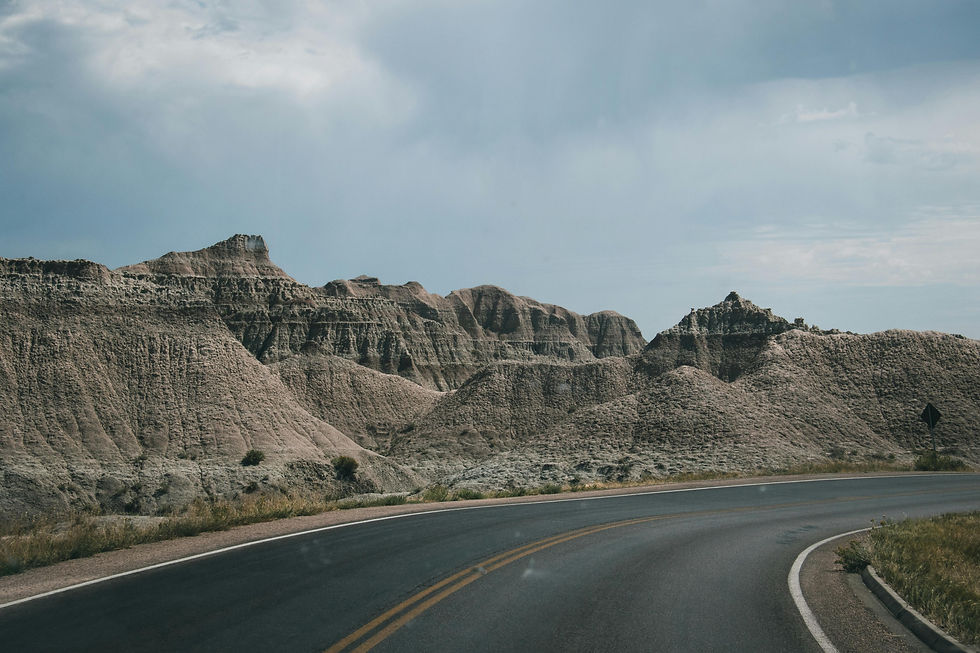
The Dinosaur Trail is a roughly 60-kilometer loop drive starting from town center. It's geologically marked—you're literally driving through different layers of 75-million-year-old rock. Your GPS doesn't care. You do. Here's what you hit:
Royal Tyrrell Museum — already covered.
Horseshoe Canyon — A 17-km drive west. The most visually striking landscape in the region. You descend 220 meters into a canyon with red-and-pink ribboned walls that look like someone took a Grand Canyon miniature and dropped it in Alberta. The 3-km loop hike at the bottom is moderate, scenic, and worth doing if you've got 90 minutes. Parking is free. Trail is free. Go early—parking fills even on weekdays in summer. (Your phone won't have service down there, which is either a feature or a bug depending on your perspective.)
Orkney Viewpoint — A pullout with a sight line over badlands layers. 10 minutes standing. Excellent light at golden hour. Minimal effort. Maximum payoff for photos. This is where you understand why people drive three hours just to point cameras at rocks.
Atlas Coal Mine Historical Park — A preserved coal mining site with interpretive trails and old buildings. More niche than the other stops, but if you're into industrial history (or just want to understand why Alberta became what it is), 45 minutes is worthwhile. Admission is $6. (The buildings are genuinely well-preserved. The stories are surprisingly good. Staff are knowledgeable and not tired, which counts for something.)
Hoodoos Trail — A 2-km loop hike through badlands formations. Easy, scenic, photogenic. The word "hoodoo" sounds made up but it's real—they're erosion-carved spires that look like someone melted them. Parking and trails are well-maintained. Budget 60 minutes. This is where most people actually feel like they're hiking in another world instead of standing at a pullout. (It's not. You're walking through 75-million-year-old scenery. The distinction matters.)
Bleriot Ferry — A free hand-crank ferry across the Red Deer River. Seasonal (April–November). Operates "as needed"—translation: you press a button, someone hand-cranks you across. You're paying in patience instead of money. Wait 10–15 minutes and you're across. It's oddly charming. Also oddly pointless unless you're continuing east. But it's free, which is how Albertans measure value.
Driving the loop takes 4–6 hours depending on hikes and stops. Do it in one day if you're focused. Spread it over two if you want breathing room and second helpings of golden hour.
Beyond Dinosaurs: The Badlands Photography (Where Cameras Actually Shine)

Drumheller's light is different. The badlands absorb and reflect light in ways that make photos look better than they should. You could point a phone camera at a rock wall and it comes out looking like National Geographic shot it. Golden hour (dawn and dusk) lasts longer here because the terrain is exposed—no tree cover, no shade, just rock and sky doing their job. Sunset from Orkney Viewpoint is calendar-worthy. Sunrise from Horseshoe Canyon is legitimately stunning. (We're not overselling this. Bring a real camera if you have one. Bring a phone if you don't. Either way, you'll get shots worth keeping.)
If you're here for photos specifically, arrive the afternoon before and plan two sunrise sessions. You'll get images worth the early wake-up. (Yes, 5 AM is stupid. Yes, you should do it anyway.)
When to Visit: Season Actually Matters Here
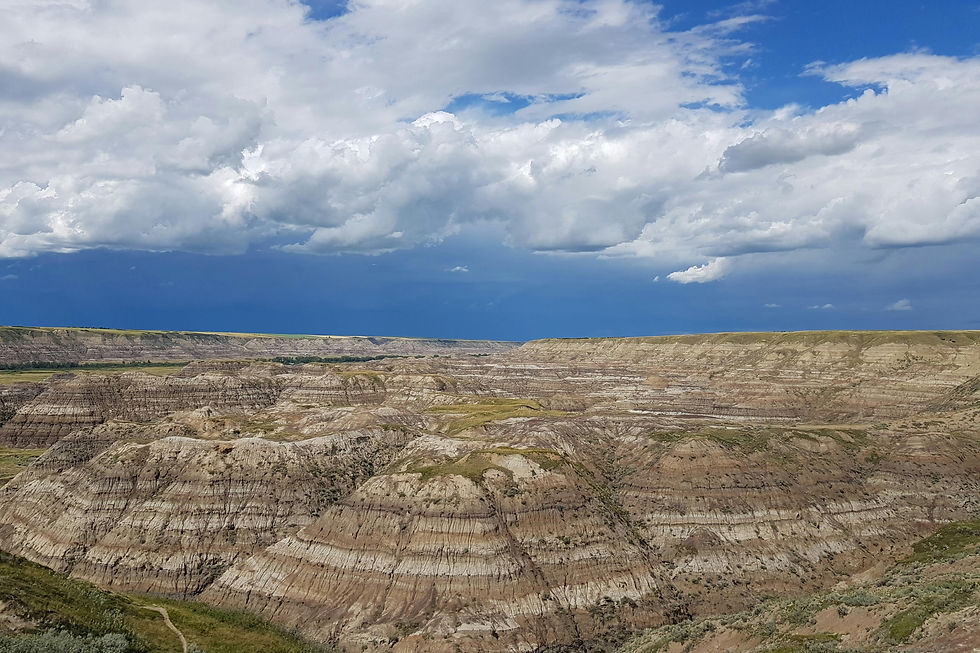
May–June: Green, flowers blooming, fewer crowds, but weather is unpredictable. Rain is frequent. Roads are clear. (Spring is genuinely nice here—you're just gambling on the forecast.)
July–August: Peak season. Hot (25–28°C), busy on weekends, all facilities open. Roads can get dusty but are passable. (It's worth it if you can't come in shoulder season. Just budget extra time for parking.)
September–October: Genuinely the best time. Cool (15–20°C), clear skies, dramatically lower crowds. By late September, hoodoos get an almost reddish glow from the angle of sunlight. October has fewer visitors, but facilities close mid-month. (If you can only visit once, aim for this window. The weather is reliable and the light is better.)
November–April: Many attractions close or reduce hours. Weather is unpredictable. Most people skip it. (Rightfully so. Alberta winter makes decisions for you.)
Budget 2–3 days if you want to actually experience the place. One day means Royal Tyrrell Museum + T-Rex statue. Two days means adding the Dinosaur Trail. Three days means adding Dinosaur Provincial Park (another 40 km south) if you want to really understand the geology and why paleontologists camp out here.
Where to Stay and Eat (Which Is Fine, Just Fine)

Drumheller has maybe 10 hotels, mostly mid-range. Budget $90–$160/night in shoulder season, $140–$200+ in July–August. Book ahead in summer—the town fills on weekends. (The hotels are fine. Clean, functional, nothing inspired. Which is all you need after a day in the badlands.)
For food: options are functional but not exceptional. Eat where locals eat (ask your hotel). The town is small enough that "best restaurant" changes based on who's working that week. (This is not a food destination. You're here for rocks and light. Don't overthink the meal—grab tacos and move on.)
The Real Advantage: It's Not Banff (And That's the Whole Point)

Drumheller gets 500,000 visitors annually. Banff gets 4 million. You'll notice the difference immediately. There are no crowds at Horseshoe Canyon. Parking is available on weekdays. The trails don't feel like commutes. You're not dodging people to take a photo. You're not waiting in line for a scenic overlook. You're just... looking at badlands with whatever peace and quiet you brought with you.
If you want badlands scenery without the Rocky Mountain Alpine crowds, Drumheller is where you get it. (And if Banff is still on your list, good—come here instead and skip Banff on your next trip. More people should.)
Frequently Asked
Q: How far is Drumheller from Calgary? About 140 km (1 hour 45 minutes by car), heading northeast on Highway 1 then north on Highway 9.
Q: Can I do Drumheller in a day? Yes, but you'll miss the actual experience. Royal Tyrrell Museum + T-Rex statue + a quick drive takes 4–5 hours. If you want to hike Horseshoe Canyon and do the Dinosaur Trail, budget 2 days minimum.
Q: Is Drumheller good for kids? Yes, if your kids like dinosaurs or hiking. The museum is genuinely good for ages 8+. The T-Rex climb is hilarious for ages 5+. Hiking depends on fitness, but most badlands trails are moderate.
Q: What's the weather like? Summer: 20–28°C, dry. Spring/Fall: 10–18°C, occasional rain. Winter: -5–5°C, snow is possible.
Q: Do I need a guide for the Dinosaur Trail? No—the route is clearly marked and safe. If you want geological interpretation or a curated itinerary while you enjoy the views, that's when a guide adds value.
Q: Can I combine Drumheller and Banff in one trip? Yes. Drumheller is 3.5 hours from Banff. You could do Drumheller (2–3 days) + Calgary (0–1 day) + Banff (2–3 days) in a week. Driving between them is part of the experience.
Ready to Explore Drumheller
Drumheller won't blow your mind with hype. It'll win you with landscape. Budget a couple days, bring a camera, and plan for the badlands to take longer than you thought. You'll understand why locals keep coming back.
We run small group tours through Alberta, including Drumheller and the surrounding badlands. Max 21 people, actual geology knowledge, and someone navigating logistics while you enjoy the view. Tours start from $100 per person.
Call us at 226-201-3180 or book online at stoneandskyadventures.ca.


Comments